Why Is DeepSeek So Cheap? AI Cost Economics Explained
Swarnava Dutta10 min read
Deepseek Training CostDeepseek Inference Cost
Contents

"Why is DeepSeek so cheap, are we missing something?" is a fair question to ask when a month of token spend on it lands closer to a rounding error than to an incumbent invoice. Suspicion is the natural first instinct - cheap AI usually implies a catch buried in the terms of service, or a model that quietly falls apart on anything harder than a summarization task.
The answer is messier and more interesting than either "miracle" or "scam." DeepSeek's pricing sits at the intersection of at least four different things that get flattened into one number in headlines: what it cost to train the model, what it costs to run inference on it, what the company charges you per token, and what strategic bet is being made by giving so much of it away for free.
Conflate those and you'll draw the wrong conclusion either way. Separate them, and the cost story actually makes sense.
Quick answer
DeepSeek is cheap for five stacked reasons: efficient architecture, cheaper serving infrastructure, aggressive API pricing set for market share, free consumer access, and a deliberate ecosystem strategy. Mixture-of-experts routing fires only a fraction of parameters per token, cutting inference compute. The widely quoted $5.6 million figure covers only DeepSeek-V3's final pretraining run at an assumed $2 per H800 GPU-hour, excluding salaries, failed experiments, and DeepSeek-R1.
Why Is DeepSeek So Cheap? The Five Main Cost Levers
Five things stack together to produce that sticker shock. None of them alone explains it - together, they do:
- Efficient architecture - sparse activation and memory-saving attention cut the compute needed per request.
- Cheaper serving infrastructure - hardware and software tuned tightly to the accelerators actually available.
- Aggressive API pricing - rates set for market share, not necessarily for margin.
- Free consumer access - a distribution decision that trades revenue for adoption.
- A deliberate ecosystem strategy - courting developers and open-source users to build a moat around usage, not just the model.
Here's the trap, though - low customer prices don't prove the whole model was built for pocket change. A company can eat losses on inference to win market share, subsidize a consumer app from other revenue, or price a new entrant aggressively regardless of true unit cost. Price is a decision. Cost is an accounting fact.
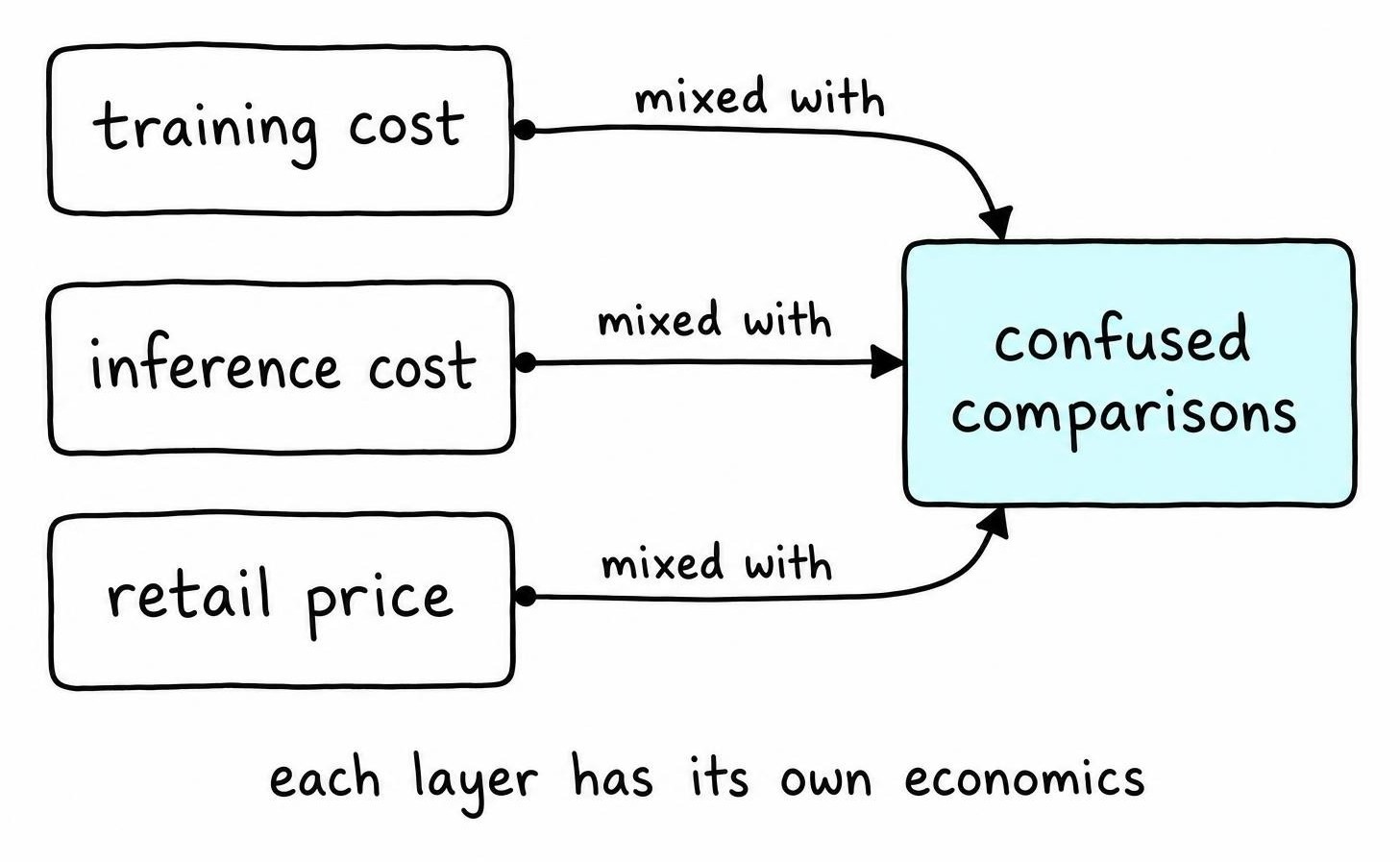
Training Cost, Inference Cost, and Price Are Different Metrics
Three separate layers matter here: the one-time expense of training the model, the recurring cost of running inference on every request, and the retail price charged to you. Comparing DeepSeek's training number to a US lab's inference bill, or vice versa, produces nonsense conclusions. Free access, similarly, is a distribution choice - it tells you nothing about whether the underlying compute was free.
How DeepSeek Works: Efficiency Without Activating Every Parameter
Mixture-of-experts routing means only a fraction of the model's parameters fire for any given token, instead of the whole network lighting up every time. Add in attention mechanisms tuned to shrink memory overhead, lower-precision math, and infrastructure built around the specific hardware available, and inference gets meaningfully cheaper to run. That said, architecture isn't the whole story - utilization rates, data-center strategy, and plain old pricing choices matter just as much as clever engineering.
DeepSeek Training Cost: What the Famous Figure Excludes
The number everyone quotes - roughly $5.6 million for the final pretraining run - comes straight from the DeepSeek-V3 technical report, which estimates GPU-hours against an assumed rental rate of $2 per H800 GPU-hour. That's it. It's a compute-hours estimate for one pretraining run, not a company P&L.
It excludes the failed experiments that never made it into the paper, the data pipeline engineers, salaries, office leases, and the hardware itself if it was purchased rather than rented. It also isn't DeepSeek-R1. R1's reasoning-focused post-training, reinforcement learning stages, and evaluation infrastructure are a separate development effort layered on top of V3, with its own compute bill that the famous figure never touches.
Comparing that number to a rival lab's "total training cost" only works if you match scope, hardware pricing assumptions, utilization rates, and training stage. Most viral comparisons do none of that.
Why Training-Cost Comparisons Often Mislead
A marginal GPU-rental estimate assumes you're renting compute by the hour at market rate. Capital expenditure accounting - buying and depreciating thousands of GPUs over years - tells a completely different economic story for the same cluster.
If DeepSeek's team already owned or had prior access to hardware, the marginal cost of one more training run looks tiny on paper. That doesn't mean the underlying economic cost was zero - someone still paid for the silicon. Treat any external estimate as informed speculation, not audited disclosure, since none of this comes from published financials.
DeepSeek Inference Cost and Model Efficiency Explained
If you're asking why is DeepSeek so cheap to actually run rather than just to license, this is where the sparse-activation story pays rent. Fewer active parameters per token means less matrix multiplication per request, and attention tricks that shrink memory footprint let more requests share the same accelerator. That combination lowers compute and memory use simultaneously, which is rarer than it sounds - usually you trade one for the other.
But architecture only sets the ceiling. Real-world serving cost lives in several operational variables:
- Batching strategy - how efficiently requests get grouped before hitting the accelerator
- Cache hit rates - repeated prompt prefixes reuse computed attention state instead of recomputing it
- Quantization choices - lower-precision weights cut memory bandwidth at some accuracy cost
- Accelerator utilization - idle GPU time between bursts still costs money
- Output token volume - reasoning models can generate long intermediate traces before the final answer
That last point catches batch jobs routed through DeepSeek's reasoning mode instead of the standard chat endpoint. Size such a job on output length from a non-reasoning provider and the queue runs far longer than planned, because the model generates long intermediate reasoning traces before producing the final answer. The per-token rate stays cheap. The total token count for the task is what changes.
Then there's the cost nobody puts on a pricing page: latency under load, retry storms when a request times out, rate-limit headaches, monitoring, and the surge capacity needed when everyone hits the API at once. Cheap per-token pricing doesn't erase any of that operational weight.
DeepSeek API Pricing, Free Access, and Local Use
Is DeepSeek free? Yes and no, depending which door you walk through.
There are really four separate products wearing one brand name: the free consumer chat app, the paid first-party API billed per token, third-party platforms hosting the same open weights at their own rates, and the raw model weights you can download and run yourself. Conflating them is how someone screenshots a chat-app rate limit and calls it an "API outage."
The free chat interface and the paid API enforce different limits, so a coding example can stall at a usage cap mid-answer even when the same prompt has run cleanly through the API all week. Assuming the free tier behaves like the API is the mistake: the caps belong to the surface, not to the model. I test the exact surface I'm about to demo, not the adjacent one.
Check DeepSeek's own pricing page for current input, cached-input, and output-token rates before quoting a number anywhere - promotions and rate cards shift, and a figure from a few months back can already be stale. Cached-input pricing in particular tends to run well below fresh-input pricing, which rewards repeated prompts over one-off queries.
Free tiers rarely mean unlimited. Expect usage caps, queue delays at peak hours, missing features from the paid tier, and data-handling terms worth actually reading rather than skimming.
Running the open-weight models locally sidesteps per-token fees entirely, but it isn't free - you're trading vendor billing for GPU hardware, electricity, and your own deployment and maintenance time. If you're weighing that tradeoff seriously, it's worth reading up on Ollama's security posture before you self-host anything customer-facing.
Why DeepSeek Stays Cheap: Revenue and Business Strategy
How does DeepSeek make money if so much is free? The API is the direct revenue path - every paid token has a real invoice behind it. Beyond that, public visibility into DeepSeek's full finances is thin; there's no earnings call breaking down margin per model tier.
Low prices do obvious strategic work regardless of whether they're profitable today. Cheap access pulls in developers who'd otherwise default to an incumbent, seeds an ecosystem of tools built around the API, and forces competitors to defend their own pricing. It's worth naming the possibility plainly: some pricing may sit below fully loaded cost as a market-entry move. That's inference, not confirmed fact - and a sustainable margin is a different question from a price-war rate.
DeepSeek vs ChatGPT Cost: Compare Total Value, Not One Rate
Is DeepSeek AI better than ChatGPT? Wrong question. The right one is which model wins for your specific workload, at your actual usage pattern, once you count everything past the sticker price.
Start with like-for-like comparisons. Match the model tier, the reasoning mode, the context length, and the token-counting method, since input, output, and cached tokens aren't priced the same anywhere.
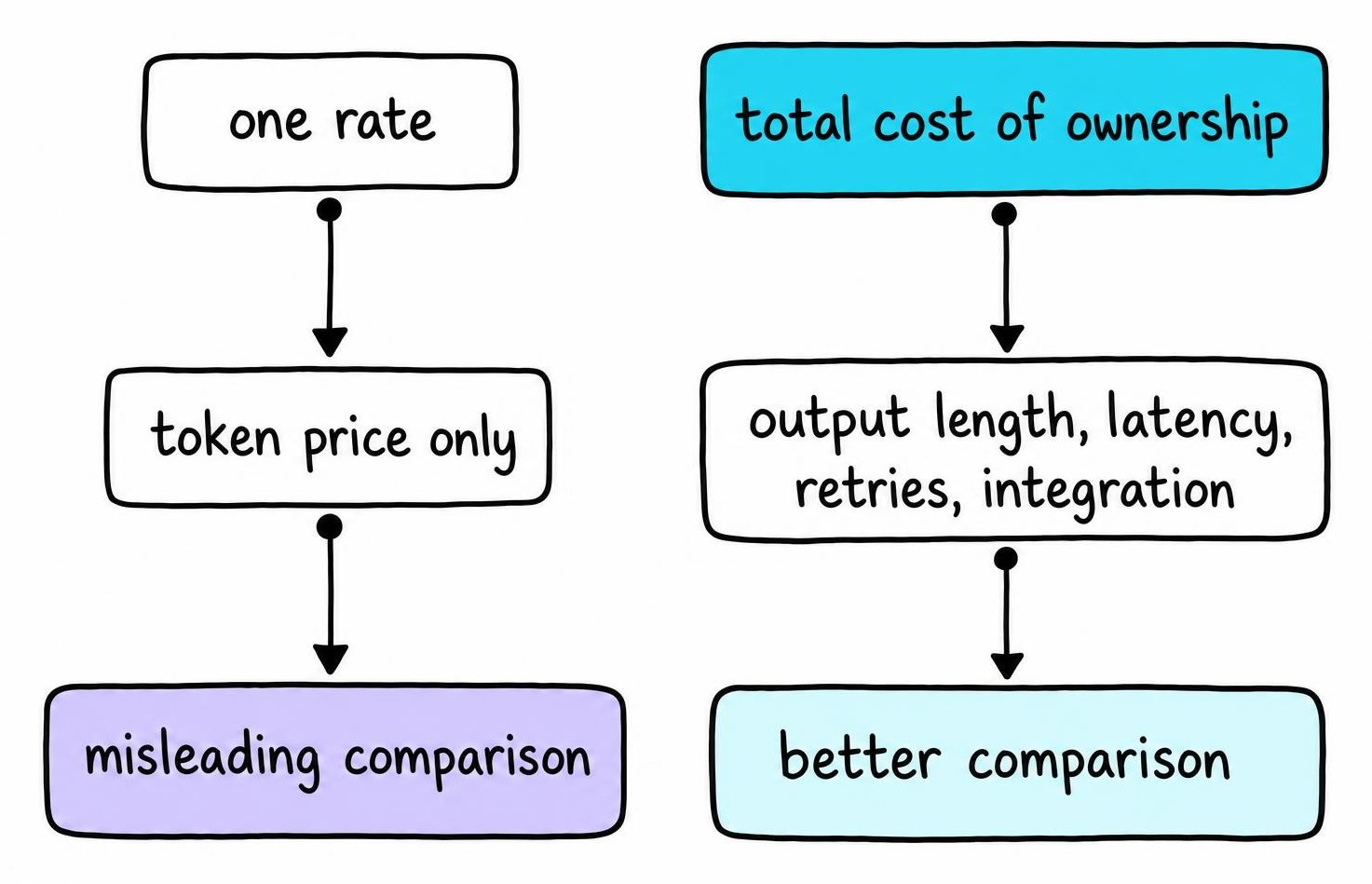
Total cost of ownership pulls in more than the invoice: output length, since reasoning traces inflate token counts; latency, which affects user experience; retries after timeouts, which cost money twice; and integration effort that eats engineer-hours never itemized on a rate card.
DeepSeek tends to shine on coding tasks, budget-sensitive high-volume workloads, research experimentation, and anywhere local deployment is viable. ChatGPT's ecosystem - multimodal tools, enterprise admin controls, mature integrations - often wins for polished, compliance-heavy production apps, a tradeoff that also plays out in text-to-image AI pricing comparisons. Benchmarks help, but run your own eval set before trusting either leaderboard.
Privacy, Security, Bans, and US Availability
Cheap pricing invites a second question: cheap in what other ways? The consumer app, the API, and self-hosted weights carry genuinely different risk profiles. The chat app collects usage data per its published policy; the API changes what's logged and retained; a self-hosted model sends nothing anywhere by default.
Reported concerns include data storage location, content censorship on sensitive topics, and murky regulatory compliance. Security researchers have also flagged exposed backend infrastructure and questionable data-handling practices in independent analyses of the platform.
Reporting has covered broader data-safety questions around the app as well, including coverage of DeepSeek data safety concerns. Most publicized government bans target official devices or regulated agencies, not the general public - a distinction that gets lost in headline shorthand. As of this writing, the app, API, and downloadable weights remain accessible in the US, but access has shifted before and can shift again.
A practical framework: weigh data sensitivity, hosting location, contractual protections, and your own organization's policy - not vibes from a headline.
When Local DeepSeek Deployment Reduces - and Adds - Risk
Running weights locally keeps prompts and outputs inside infrastructure you control, which genuinely helps for sensitive data. But it hands you new jobs: verifying model provenance, access controls, patch cadence, logging, content safeguards, and supply-chain review of every dependency. Downloadable weights aren't automatically private, secure, compliant, or cheap - that work is now yours.
FAQ
Is DeepSeek available for free?
Yes, the consumer chat app is free with usage caps and occasional queue delays at peak times. The API is metered per token, and running the open weights yourself is free of licensing fees but costs you hardware and electricity instead.
What is DeepSeek best for?
It tends to punch above its price on coding tasks, high-volume budget-sensitive workloads, and research experimentation where you want to test ideas cheaply. It's also a solid fit anywhere local deployment matters more than a polished enterprise toolchain.
Is DeepSeek AI better than ChatGPT?
Neither wins outright - it depends on your workload, budget, and how much you value ecosystem maturity versus raw cost efficiency. Run both against your own eval set rather than trusting a single leaderboard number.
Is DeepSeek available in the US?
Yes, as of this writing the app, API, and downloadable weights are all accessible. Regulatory scrutiny and platform-level decisions have already prompted restrictions elsewhere, so treat this as a snapshot rather than a permanent guarantee.
Why is DeepSeek banned?
Some governments have restricted DeepSeek on official devices or for regulated agencies, citing data storage location, independent security research findings, and unclear compliance practices. Most bans target government use specifically, not the general public, though headlines often blur that distinction into a blanket "ban."
Further Reading
- ExpertFlow: Efficient Mixture-of-Experts Inference via Predictive Expert Caching and Token Scheduling - Xin He, Shunkang Zhang, Kaijie Tang et al. (2024)
- Task-Specific Efficiency Analysis: When Small Language Models Outperform Large Language Models - Jinghan Cao, Yu Ma, Xinjin Li et al. (2026)